Free shipping on orders over $85 valid for Italy only
Free shipping on orders over $85 valid for Italy only
Free shipping on orders over $85 valid for Italy only
Free shipping on orders over $85 valid for Italy only
Free shipping on orders over $85 valid for Italy only
Free shipping on orders over $85 valid for Italy only
Maritati Pasta – Italian recipe, ingredients and tradition | Buy Maritati fresh pasta
The tradition of hubby: origin and significance
Origin of the name “husbanded”
Symbolic meaning of maritimes in Italian cuisine
The ingredients for the recipe for marinated pasta
Tomatoes and sausage: the perfect sauce for marinis
Broccoli, ricotta cheese and parmesan cheese: the finishing touch for maritimes
The recipe for marinated pasta
Preparing fresh pasta for maritimes
Preparing the gravy for the maritimes
A complete one-dish meal: how to serve maritimes
Buy fresh pasta and ingredients for maritimes
Where to buy fresh pasta for maritimes
Where to find ingredients for marinated pasta
Introduction
Maritati pasta is a unique dish typical of Neapolitan cuisine, prepared with fresh pasta, tomatoes, sausage, broccoli, ricotta and parmesan cheese. In this article, we will explore the tradition of maritati, the ingredients needed for the recipe, step-by-step preparation, and where to buy fresh pasta and ingredients.
The tradition of hubby: origin and significance
Origin of the name “husbanded”
The name“maritati” comes from the fact that the dish combines two different types of pasta, usually fusilli and penne rigate. The pasta is cooked together, symbolizing the marriage union between the two different formats.
Symbolic meaning of maritimes in Italian cuisine
In Italian cuisine, maritati symbolize the union and conviviality among ingredients. Tomato represents the red of love, sausage and broccoli represent meat and side dish, respectively, while ricotta and parmesan represent creaminess and flavor.
The ingredients for the recipe for marinated pasta
To prepare marinated pasta, the following ingredients are needed:
Tomatoes and sausage: the perfect sauce for marinis
To prepare the sauce for marinated pasta, start by soaking the peeled tomatoes in a little hot water. Meanwhile, in a frying pan, sauté garlic in olive oil and add the crumbled sausage. When the sausage is golden brown, add the peeled tomatoes, saute and cook for 10-15 minutes.
Broccoli, ricotta cheese and parmesan cheese: the finishing touch for maritimes
While the sauce is cooking, steam the broccoli for about 5-7 minutes, until tender. Then, mix the broccoli with the ricotta and grated Parmesan cheese. Add the mixture to the sauce and cook for another 5 minutes.
The recipe for marinated pasta
Preparing fresh pasta for maritimes
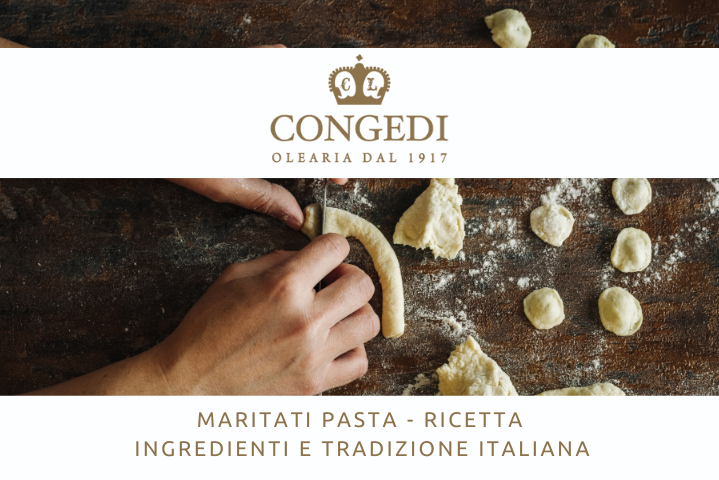
To make fresh pasta for maritats, start by mixing 200g flour with 2 eggs and a pinch of salt. Knead until the dough is smooth and elastic Let the dough rest for about 30 minutes. Next, roll out the fresh dough and cut it into pieces of about 4-5 cm. Cook the pasta in plenty of salted water for about 2-3 minutes, until it is al dente.
Preparing the gravy for the maritimes
While the pasta is cooking, prepare the sauce following the instructions above.
A complete one-dish meal: how to serve maritimes
When the pasta is cooked, drain and pour the pasta into the sauce. Stir well and serve hot, garnishing with a little ricotta and grated Parmesan cheese.
Buy fresh pasta and ingredients for maritimes
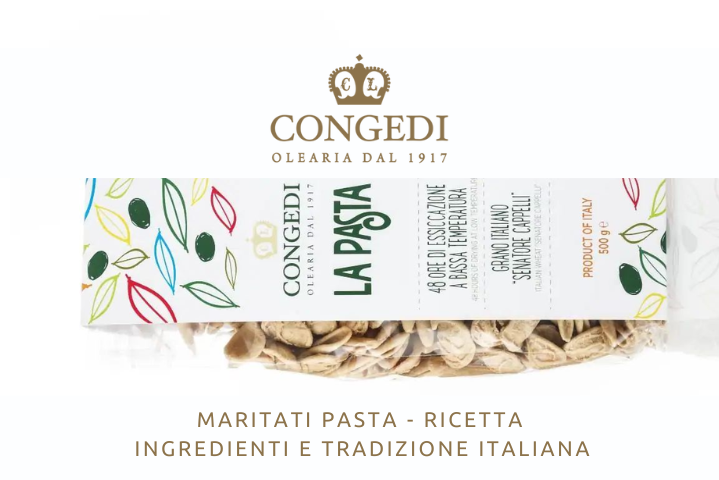
If you do not have time to make fresh pasta at home, you can purchase it from an artisan fresh pasta shop. Alternatively, you can buy all the ingredients for marinated pasta at a specialty grocery store. Be sure to choose fresh, high-quality ingredients for the best result.
Conclusion
Maritati pasta is a unique dish of Neapolitan cuisine, a symbol of conviviality and togetherness. The recipe is easy to prepare, but requires fresh, high-quality ingredients to achieve the best result. We hope this article has helped you discover the tradition of maritati and prepare a delicious fresh pasta recipe.
Other traditional Italian pasta dishes to try
If you are fond of Italian cuisine, you can’t help but try other traditional pasta dishes. Here are some options to consider:
Spaghetti carbonara: pasta with bacon, eggs, pecorino Romano cheese and black pepper.
Lasagna Bolognese: egg pasta with meat sauce, béchamel sauce and parmesan cheese.
Penne all’arrabbiata: pasta with a tomato, garlic, chili pepper and parsley sauce.
Tagliatelle al ragù: egg pasta with a rich meat sauce.
Linguine al pesto: pasta with a sauce of basil, pine nuts, garlic, Parmesan cheese and olive oil.
Each of these dishes represents a different region of Italy and a unique culinary tradition. Try to discover and find out which one will become your favorite.
Per fornire le migliori esperienze, utilizziamo tecnologie come i cookie per memorizzare e/o accedere alle informazioni del dispositivo. Il consenso a queste tecnologie ci permetterà di elaborare dati come il comportamento di navigazione o ID unici su questo sito. Non acconsentire o ritirare il consenso può influire negativamente su alcune caratteristiche e funzioni.
Funzionale
Always active
L'archiviazione tecnica o l'accesso sono strettamente necessari al fine legittimo di consentire l'uso di un servizio specifico esplicitamente richiesto dall'abbonato o dall'utente, o al solo scopo di effettuare la trasmissione di una comunicazione su una rete di comunicazione elettronica.
Preferenze
L'archiviazione tecnica o l'accesso sono necessari per lo scopo legittimo di memorizzare le preferenze che non sono richieste dall'abbonato o dall'utente.
Statistiche
L'archiviazione tecnica o l'accesso che viene utilizzato esclusivamente per scopi statistici.L'archiviazione tecnica o l'accesso che viene utilizzato esclusivamente per scopi statistici anonimi. Senza un mandato di comparizione, una conformità volontaria da parte del vostro Fornitore di Servizi Internet, o ulteriori registrazioni da parte di terzi, le informazioni memorizzate o recuperate per questo scopo da sole non possono di solito essere utilizzate per l'identificazione.
Marketing
L'archiviazione tecnica o l'accesso sono necessari per creare profili di utenti per inviare pubblicità, o per tracciare l'utente su un sito web o su diversi siti web per scopi di marketing simili.
 Free shipping on orders over $85 valid for Italy only